
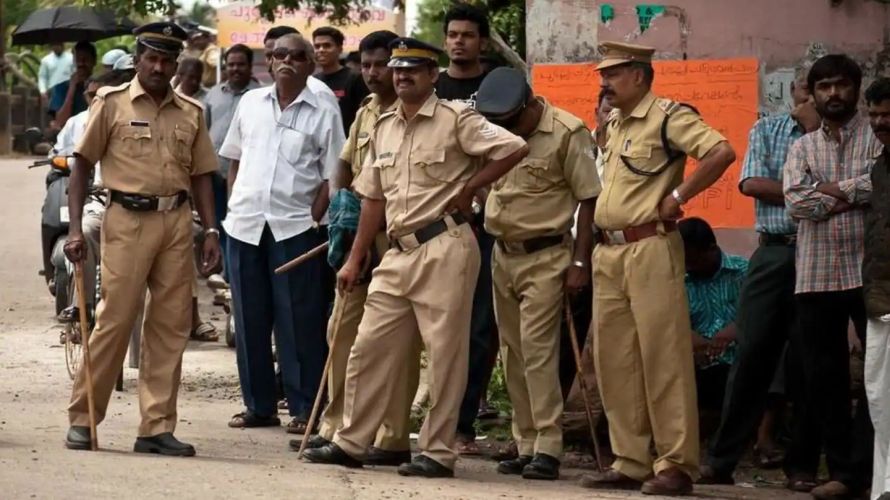
Corruption in the Indian police is a systemic issue largely driven by political influence, poor remuneration, and broad discretionary powers. It frequently manifests as petty extortion, bribery for registration of FIRs, case investigations, and protection rackets. Despite frequent public controversies and institutional acknowledgement, structural reforms not only are slow, but also have come a cropper, so far, largely because of their politicization. Police, in the scheme of the Constitution of India, is state subject and broadly functions under the common guidelines of the union government with local variables.
Abuse of police power emanates from their collusion with political power and the government. Police is also used as instrument of government power to oppress, suppress and state terrorism against innocent people. Police power is also abused as vendetta politics by the state against the political adversaries. It is because of political collusion, police indulges in all sorts of corruptions and malpractices with impunity. Because of power protection, police is emboldened to indulge in corrupt practices and get away from the public accountability, still basking in the notoriety of colonial repressive power and its gross misuse.
Core causes of corruption include political interference, working conditions, discretionary power, and institutional culture of impunity. Politicians’ interference leading to biased or botched up investigations, preferential treatment, and political abuse often heavily influence police personnel. In addition, low salaries, arduous duty hours, or a lack of proper benefits at the lower constable levels often drive personnel to supplement their income through corrupt practices. Vague laws add unchecked administrative discretion offer officers ample opportunity to extort citizens or selectively enforce the law. Hierarchical structures and outdated practices, some dating back to colonial era, foster environment where bribery is normalized.
Politicians frequently use police forces as tools for personal and partisan agendas, subverting investigations and shielding powerful individuals. There is a big transfer-posting rackets in the police. Lucrative postings and desirable transfers within the department are frequently bought and sold. Officers who pay high bribes for these assignments often extort the public to recover their investments. Broad discretionary powers in enforcing vague laws provide endless opportunities to solicit bribes to file First Information Reports (FIRs), ignore violations, or influence the investigation. Internal grievance mechanisms and oversight boards are often ineffective, leading to a culture of impunity where corruption flourishes openly.
Common manifestations of police malpractices are visible in extortion, bribery, falsified evidence and selective enforcement of law. Police at the beat and police station levels routinely demand regular protection money (known as hafta) from street vendors, local businesses, and organized crime rings. Bribes are also commonly extracted from grieving families navigating post-mortem and death certificates. Other modes of corruption cover fabricating evidence, planting contraband, or coercing confessions to secure convictions or meet performance targets. Police also indulge in selective enforcement of law. They get bribes from powerful and wealthy individuals to avoid their prosecution and shield them from the law.
Tackling police corruption is a complex task due to the deeply entrenched nature of the problem, though anti-corruption agencies like the Lokayukta periodically catch police personnel red handed in sting operations. The judiciary has repeatedly mandated the setup of state security commissions and police complaints authorities to insulate law enforcement from political control. The last such orders were by the Supreme Court of India in Prakash Singh judgment in 2006 directing a six-point formula to depoliticize the police, and make them independent law enforcement authority. Besides, Justice Mallimath Committee recommendations for separation of investigation and law and order in police setups to minimize, much less eliminate corruption, has not been implemented, with the result corruption continues in police with impunity and unabated.
Leave a Reply